If you’re still selling real estate the way you did three years ago, you’re already behind. And this isn’t exaggeration.
The real estate market has transformed dramatically over the last two years in ways that would’ve seemed like science fiction not long ago. Properties with virtual reality tours are getting 87% more views. Buyers are exploring homes in their pajamas from halfway around the world. Developers using 3D walkthroughs are closing deals in 90 days instead of 18 months.
But here’s what most people in the industry haven’t fully grasped yet: this isn’t just a technology trend. It’s a fundamental shift in how people buy and sell property. And it’s happening right now.
The Buyer Has Changed (And They're Not Going Back)
Consider the profile of today’s property buyer.
They’ve already done their research before they call you. They’ve seen comparable prices on three different platforms. They know the neighborhood through Google Maps Street View. They’ve checked crime statistics, school ratings, and community reviews. By the time they reach out, they’re 70% of the way through their buying journey.
But here’s the critical part: they don’t want to waste time on physical site visits unless they’re genuinely serious. They want to explore 10 properties from their couch. They want clarity before commitment. They want immersion.
This isn’t Millennials or Gen Z being difficult. This is rational buyer behavior. Why spend a Saturday afternoon driving across the city to see a property that might not be what you’re looking for?
The data backs this up. According to recent market studies, 64% of buyers are more likely to engage with interactive content than static visuals. Virtual tours aren’t nice-to-have features anymore. They’re expectations. Buyers see a property listing without a 3D walkthrough and move on.
What does this mean for the market? The real estate professional who embraces immersive marketing first will own the market. Not eventually. Now.
Three Seismic Shifts That Are Reshaping Real Estate
1. The Shift from Describing to Showing
Traditional real estate marketing relied on narrative—glossy photos, marketing copy, and agent descriptions. “Beautiful corner unit with natural light” and “spacious living area” meant something different to every buyer.
Fast forward to 2025, and that approach leaves money on the table.
Instead of describing a corner unit, show it. Let buyers see how sunlight moves through it at different times of day. Let them visualize their furniture in the space. Let them “walk” from the bedroom to the living room without leaving home.
This is why 3D walkthroughs and AR experiences are generating measurable ROI. When Parkside Residences in Seattle deployed comprehensive 3D walkthrough animation with seasonal variations and interactive features, the project went from projecting 18 months to sell to total sellout in 90 days. Average sale price exceeded projections by $47,000 per unit. International buyer participation jumped from 5% to 34%.
The numbers don’t lie: properties marketed with 3D walkthroughs achieve 87% higher sales conversion rates compared to traditional materials. Sales cycles shrink by 65%.
This works because immersive experiences bypass the cognitive friction of imagination. The brain doesn’t have to translate. It experiences.
2. The Shift from Local to Global
Five years ago, real estate was fundamentally local. Buyers came from their city. Maybe some from neighboring regions. Sellers had geographic constraints.
Today, geography is almost irrelevant.
NRIs (Non-Resident Indians) are pouring over $13 billion annually into Indian real estate, and that number is accelerating. By 2025, NRIs are expected to account for 20% of total real estate investments in India. But they’re not getting on planes to look at properties anymore.
Virtual tours are eliminating the travel barrier. Remote purchase decisions with 3D walkthroughs are up 234% compared to traditional marketing. A developer in Bangalore can now market to a working professional in Singapore who wants to invest back home—and that buyer can explore the entire property in photorealistic 3D without ever leaving their office.
For the real estate industry in India, this is transformative. Developers and agents who can deliver immersive property experiences now have access to the global wealth market. The competition just expanded globally, but so did the opportunity.
3. The Shift from Transaction to Relationship
Real estate has always been transactional. Show property, make sale, done.
In 2025, forward-thinking developers and agents are shifting this entirely. They’re using technology not just to close deals faster, but to build trust and engagement.
AI-powered chatbots answer questions 24/7. Personalized property recommendations based on browsing history. Interactive features that let buyers customize finishes and layouts in real-time. Live Q&A during virtual tours.
This isn’t feature creep. It’s relationship building through technology.
When buyers feel understood—when the platform seems to know what they’re looking for, answers questions instantly, and makes them feel valued—they’re more likely to complete transactions, and they’re more likely to become repeat clients or refer others.
According to 2024 NAR data, AI-powered personalization in virtual tours increases user engagement by 49%. But more importantly, it creates an experience that buyers remember and talk about.
The Technology Landscape: What's Actually Working
The market is saturated with flashy technologies. Not all of them matter for real estate right now.
Here’s what’s actually moving the needle:
3D Walkthroughs and VR Tours
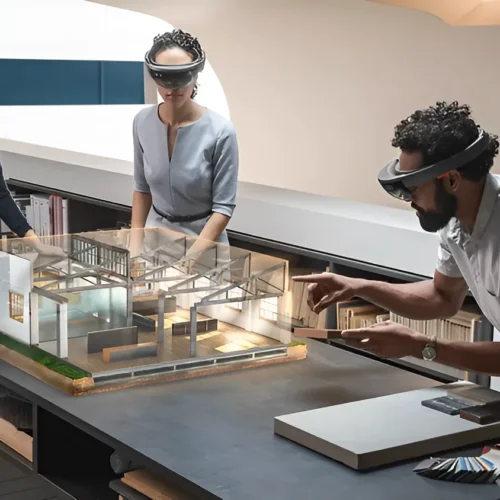
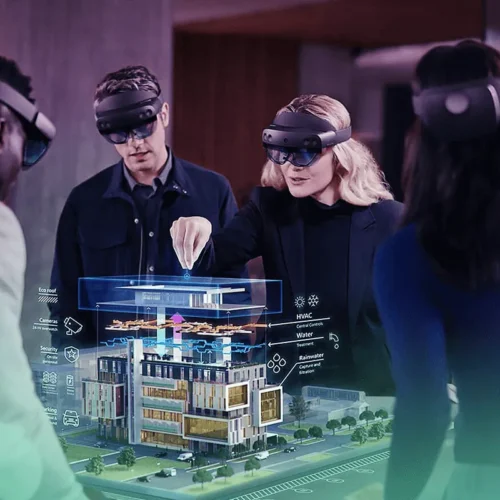
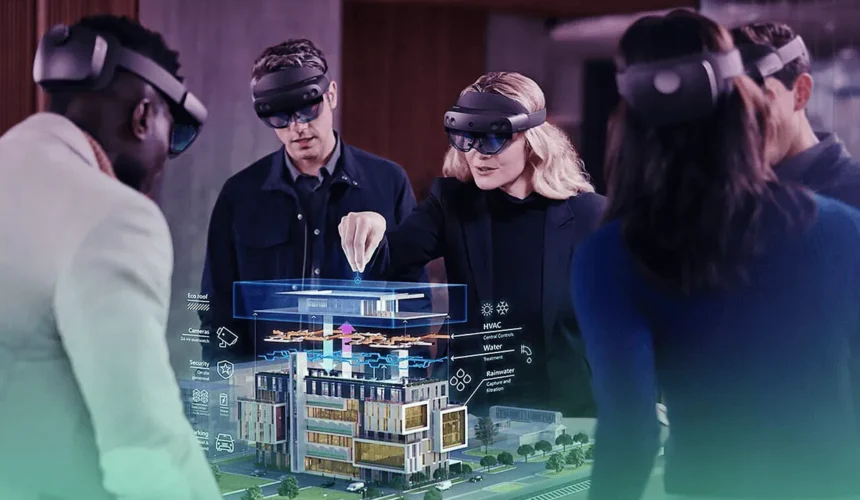
This is the workhorse technology. Buyers explore properties in photorealistic 3D. They can navigate rooms, toggle day/night lighting, explore finishes, check dimensions. For pre-construction properties, this is transformative—it lets buyers visualize spaces that don’t exist yet.
The ROI is clear: 3.2x return on marketing investment within 90 days. Properties with VR tours sell 31% faster.
Augmented Reality (AR) for Property Visualization
AR is particularly powerful for pre-construction projects. A buyer points their phone at a construction site and sees the completed building superimposed on their real-world view. They see how it fits into the neighborhood, how tall it is relative to surroundings, how sunlight will hit it.
This reduces buyer uncertainty by 71%. It’s the bridge between imagination and confidence.
AI-Powered Personalization
AI isn’t magic. The real value is in smart, data-driven recommendations. Which properties match this buyer’s preferences? What floor plans align with their budget? What neighborhoods fit their lifestyle?
AI handles this at scale. It learns from browsing behavior and makes intelligent suggestions, reducing the cognitive load on buyers and speeding up discovery.
Interactive Features and Customization
Some of the most engaging platforms now let buyers customize spaces in real-time—change furniture, adjust finishes, toggle lighting. This increases engagement duration by 189%. Why? Because they’re not just exploring; they’re imagining their life in that space.
Aerial and Video Marketing
Drone footage, video reels, live virtual walkthroughs. Video content generates significantly more engagement than static images, and buyers expect it.
The Business Case: Numbers That Matter
For developers and agents, here are the financial realities:
A 200-unit development with an average unit price of $500,000 implementing professional 3D walkthroughs can generate an additional $8.7 million in sales revenue. That’s not marketing spend; that’s incremental revenue.
Carrying costs drop by approximately $1.2 million because inventory moves faster.
Cost per qualified lead drops by up to 70%. Marketing budgets stretch further.
For pre-construction projects, the acceleration is even more dramatic. Instead of carrying inventory for 18 months, it’s carried for 6. Cost of capital decreases. Cash flow improves.
But here’s the non-financial benefit that matters just as much: trust.
When a buyer explores a photorealistic 3D walkthrough and it matches the actual property, their confidence increases dramatically. They’re less likely to back out. They’re less likely to dispute terms. They’re more likely to refer others.
The conversion rate improvement is real. When the gap between what they imagine and what they get shrinks, friction decreases.
The Global Context: Why AR/VR Investment Is Accelerating
The market is voting with capital. AR/VR in real estate is projected to reach $80 billion by 2025. This isn’t speculative money. This is institutional capital betting on immersive technology.
Why? Because it works.
81% of commercial real estate professionals have identified technology and data as their top spending priority for 2025. This isn’t a niche trend. This is mainstream industry shift.
The adoption curve is steep. Virtual tours that were considered premium upgrades three years ago are now minimum requirements. Five years ago, an agent having 3D photos was differentiating. Today, they’re expected.
This velocity matters. If your organization hasn’t already invested in immersive experiences, it’s not behind by months. It’s behind by a year or more, depending on your market.
The Reality Check: Challenges and Hybrid Approaches
The enthusiasm shouldn’t overshadow real challenges.
Setup costs for professional 3D tours and VR experiences are non-trivial. In emerging markets and smaller cities, digital literacy is still developing—not everyone is ready to explore properties in VR.
And here’s something most won’t acknowledge: virtual tours don’t fully replace site visits. They enhance them.
The future of property exploration—at least for the next 3-5 years—is hybrid. Buyers use VR and 3D tours to shortlist properties efficiently. They explore 10-15 properties virtually. Then they visit the 2-3 that genuinely match their needs in person.
This hybrid approach is actually better for everyone. Buyers save enormous time. Agents only host serious buyers. Fewer wasted site visits. Higher quality conversations when people do meet in person.
The most sophisticated developers and agents are already running this model. They market globally with immersive digital experiences. They convert serious buyers. They host efficient, high-value site visits.
What's Coming Next: 2025 and Beyond
What’s Coming Next
Here are the trends to watch for investment and strategy:
AI-Powered Analytics Integration: Developers will soon have real-time data on which features viewers engage with most, which floor plans generate the most interest, which price points buyers are exploring. This data will inform everything from staging decisions to pricing strategies.
Blockchain-Based Smart Contracts: The integration of blockchain into AR/VR platforms will enable secure, transparent, and borderless transactions. Imagine signing contracts within a virtual tour environment with cryptographic security.
Live Collaboration Spaces: Virtual deal rooms where agents, buyers, inspectors, and lawyers collaborate in real-time from different locations. This eliminates travel entirely for complex transactions.
Metaverse Property Launches: Some developers will host property launches in metaverse environments where buyers can attend virtual openings, network with other investors, and explore properties at scale.
Voice and Gesture-Based Navigation: As AR/VR hardware improves, the interface becomes more natural. Soon users will just look at a room and say “show me this in summer lighting” or gesture to open a floor plan.
These aren’t science fiction. They’re actively being built right now.
The Competitive Reality
Here’s what matters most.
In every market, there’s a first-mover advantage in technology adoption. The developers and agents who invest in immersive experiences now have 18-24 months before competitors catch up. During that window, they own the conversation. They attract the most qualified buyers. They close faster. They command premium prices.
After that window closes, it becomes table stakes. These capabilities will be needed just to compete.
The choice is binary: invest now and lead the market, or wait and play catch-up later.
The data is overwhelming. The technology is proven. The ROI is measurable. The market is moving this direction.
The only question is: will your organization move with it?
About This Perspective
This article is based on analysis of 2024-2025 real estate market data, developer case studies, and technology adoption trends across commercial and residential real estate. The statistics cited come from industry sources including NAR (National Association of Realtors), Deloitte Real Estate studies, and direct analysis of projects that have implemented immersive technologies.
The future of real estate marketing isn’t coming. It’s here. The question is whether your organization is part of it.